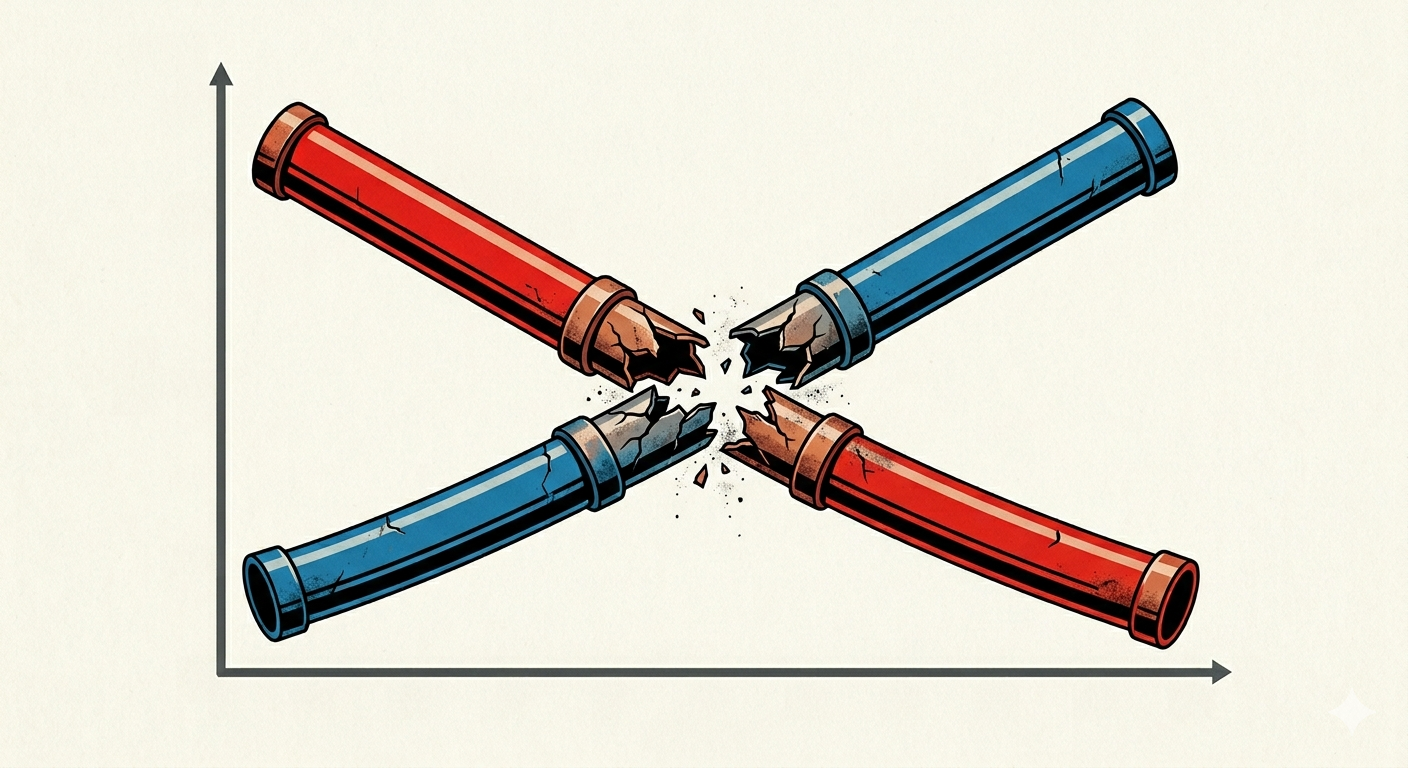
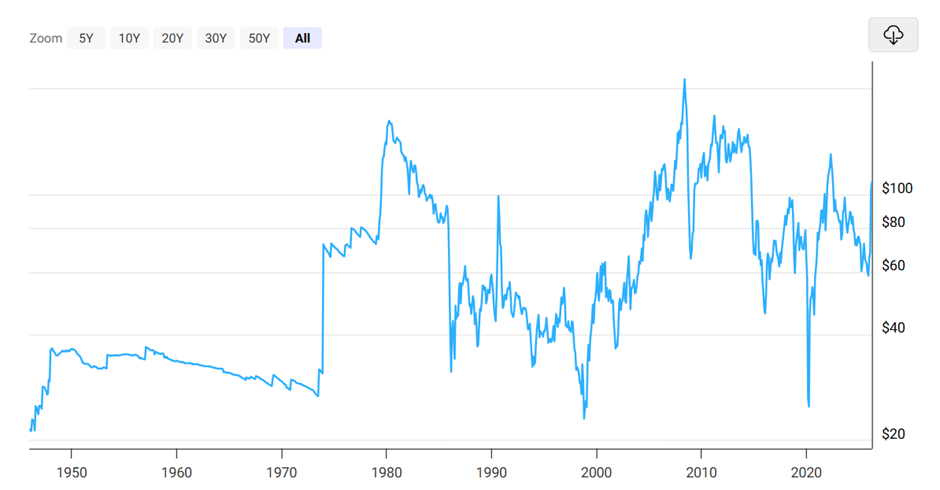
This week, my attention was caught by the increasingly frequent articles warning about the possibility that the ongoing Iranian conflict could lead to an oil shortage — with the major economic consequences one can imagine. These alarmist predictions seemed at odds with the price of oil as traded on markets: hovering between $100 and $110 a barrel, it is well above pre-conflict levels, yet still far below the inflation-adjusted highs seen during the oil shock of the late 1970s, or more recently, just before the 2007 crisis. How do we reconcile these two apparently contradictory views?
For more than two centuries, economic theory has provided a model for explaining price variations in goods and services, known as the law of supply and demand. The more expensive a good or service, the fewer potential buyers — but the more potential sellers. Provided the market is sufficiently efficient, supply and demand converge around an equilibrium price and quantity.
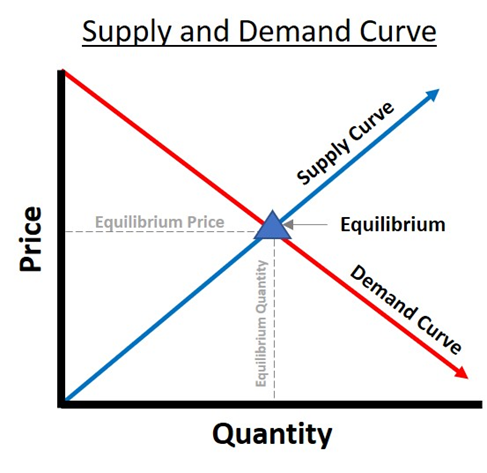
This theory, easy to grasp, nevertheless rests on simplistic assumptions. In particular, it assumes that quantities supplied and demanded can adjust freely, with price acting as the arbiter between the two — in economic theory, this responsiveness of supply and demand to price changes is called elasticity. In the case of oil, however, this elasticity is very low. On the supply side, adjusting output from an oil well is a slow and costly process, and bringing a new field into production takes between 7 and 10 years. On the demand side, while some individual drivers can significantly cut their fuel consumption when prices rise, the vast majority of consumers — particularly businesses in wealthier developed economies — are largely insensitive to price fluctuations. Economist James Hamilton has confirmed this through the lens of -historical events: the early oil crises triggered by the OPEC embargo produced a supply shock, while the 2007–2008 price surge was driven by strong demand growth from China.
We thus find ourselves in a situation where price plays only a very limited role in regulating consumption, and is therefore unable to prevent the total exhaustion of reserves.
This fragility is compounded by how our supply chains have evolved over recent decades. The pursuit of efficiency — lean manufacturing, just-in-time delivery, waste elimination — has produced supply chains of formidable operational and economic performance, built on the assumption that supply would always be available as long as you were willing to pay for it. The COVID-19 pandemic showed us that this assumption could prove wrong, with devastating consequences for global economies.
Current events should push us to rethink our approach to risk. Today’s models typically simulate a disruptive event — a financial market shock, a cyberattack, and so on — of varying duration, followed by a return to normal. What these models fail to account for is the possibility that normal never comes back. How do you adapt your production chain if, tomorrow, an essential input were to disappear permanently? In the case of oil, this extreme scenario remains unlikely. But other situations of heavy dependence on a handful of key producers could prove far more problematic: as a semiconductor manufacturer, how do you protect yourself against a shortage of rare earth elements, 70% of which are extracted in China?
For executive committees, these dynamics translate into operational vulnerabilities hiding in plain sight:
- The Procurement function is set up to negotiate price, not physical availability;
- Crisis management scenarios frame resource availability purely through the lens of cost, not existence;
- M&A teams assess targets using discounted cash flow models and business plans that assume permanent availability of raw materials.
In the face of these threats, the responses available to us are still rudimentary — and run counter to the relentless pursuit of global efficiency that has defined the past several decades. Taking control of your own supply chain by acquiring key suppliers, building strategic stockpiles, diversifying your supplier base geographically, designing production processes that can function without certain inputs…
These decisions go against the logic of efficiency that has dominated the last thirty years. They come at a cost. But the real risk, today, is continuing to optimize for a world that may no longer exist.